Quiet Luxury at the Office: Building a Workwear Wardrobe Without Logos
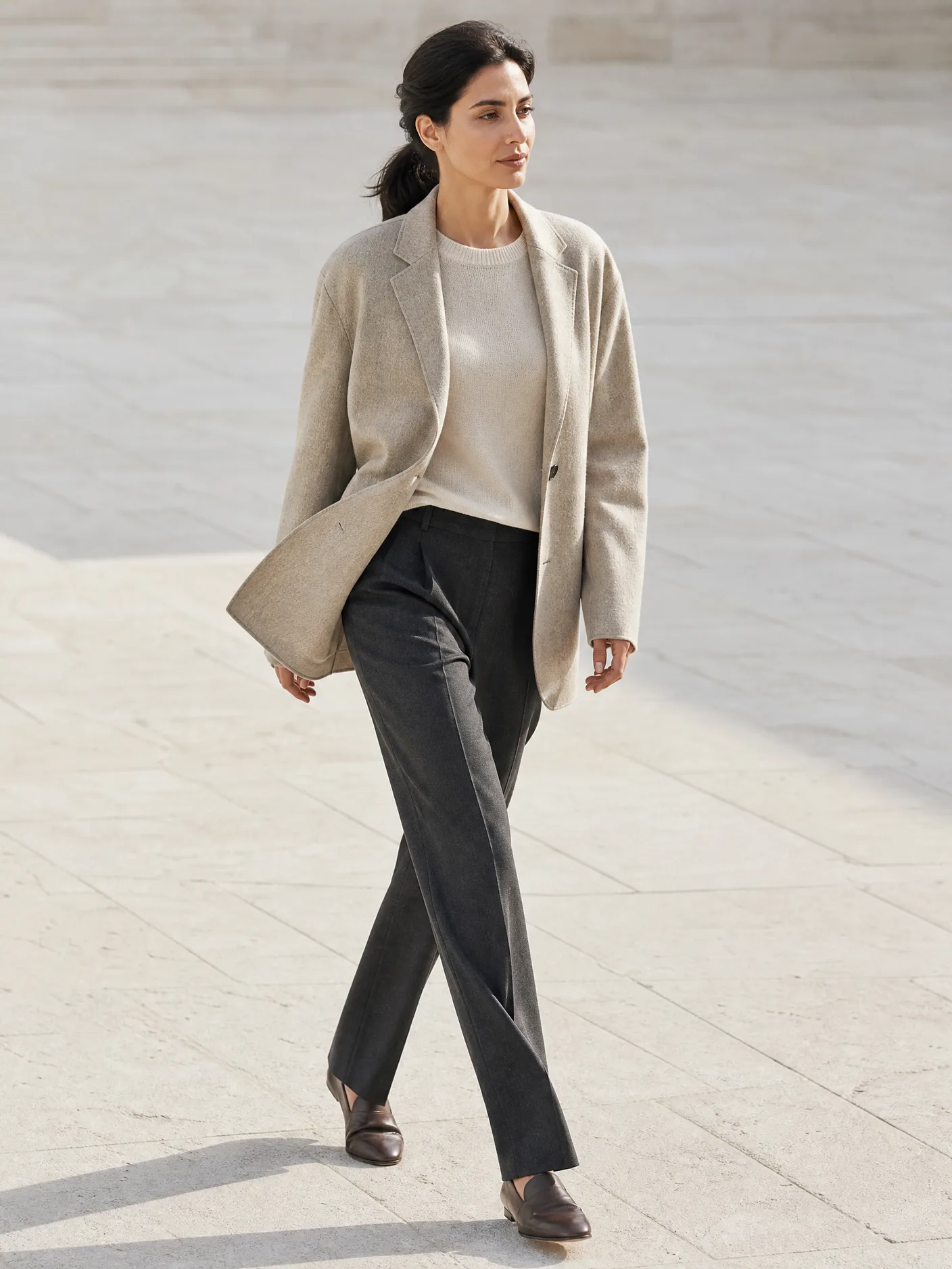
The first cold Monday of October refills the floor: the summer Fridays are over, the heating has not quite decided to come on, and the open-plan desk sees exactly what you wore. The office version of dressing well is harder than the wedding version for one reason — it has to survive repetition. A dress you wear once gets away with a great deal. A blazer you wear three days a week does not, and by its fortieth wearing the only question that matters is whether it still looks right.
The corridor between Boston and Washington runs a half-degree more formal than the rest of the country, and it reads labels faster. A visible logo at the desk is not a flex; it is information you did not mean to give. We made this case for the trading floor in the investment-banking uniform; what follows is the same logic for the rest of us — five pieces, built from cloth and cut rather than names, chosen to still be working in five years.
Bira Edit is reader-supported. If you purchase through links in this article, we may earn a commission at no cost to you. Every recommendation is chosen on merit.
Three rules before you spend
Buy the cloth, not the label. The composition line on the tag tells you more than the name above the door. A pure-wool trouser outlasts a wool-blend one through a decade of dry cleaning, and the difference is felt on the hanger long before anyone reads the label. Where a piece here trades fiber for cut, it is said plainly, because at these prices you are owed the trade.
Cost-per-wear is the only math that survives contact. A piece worn twice a week for three years is a different purchase from the same price worn twice a year, even when the receipt is identical. Everything below is chosen to be worn often, which is what makes the numbers — some of them large — hold up.
If you can name the brand from across the room, it is the wrong piece. The wardrobe that reads as senior is the one built from the fewest identifiable things. No hardware, no monogram, nothing for a meeting-room camera or a bar light to catch. The quiet is the point.
Start with the rollneck
Start here, because the rollneck is the piece you will wear under everything else and, some days, alone. Max Mara’s ribbed rollneck is the one to buy in this weight class: 100 percent virgin wool — pure fiber at the entry price of this list, which is rarer than it should be — in a medium grey that sits under the camel and charcoal to come without arguing with either.
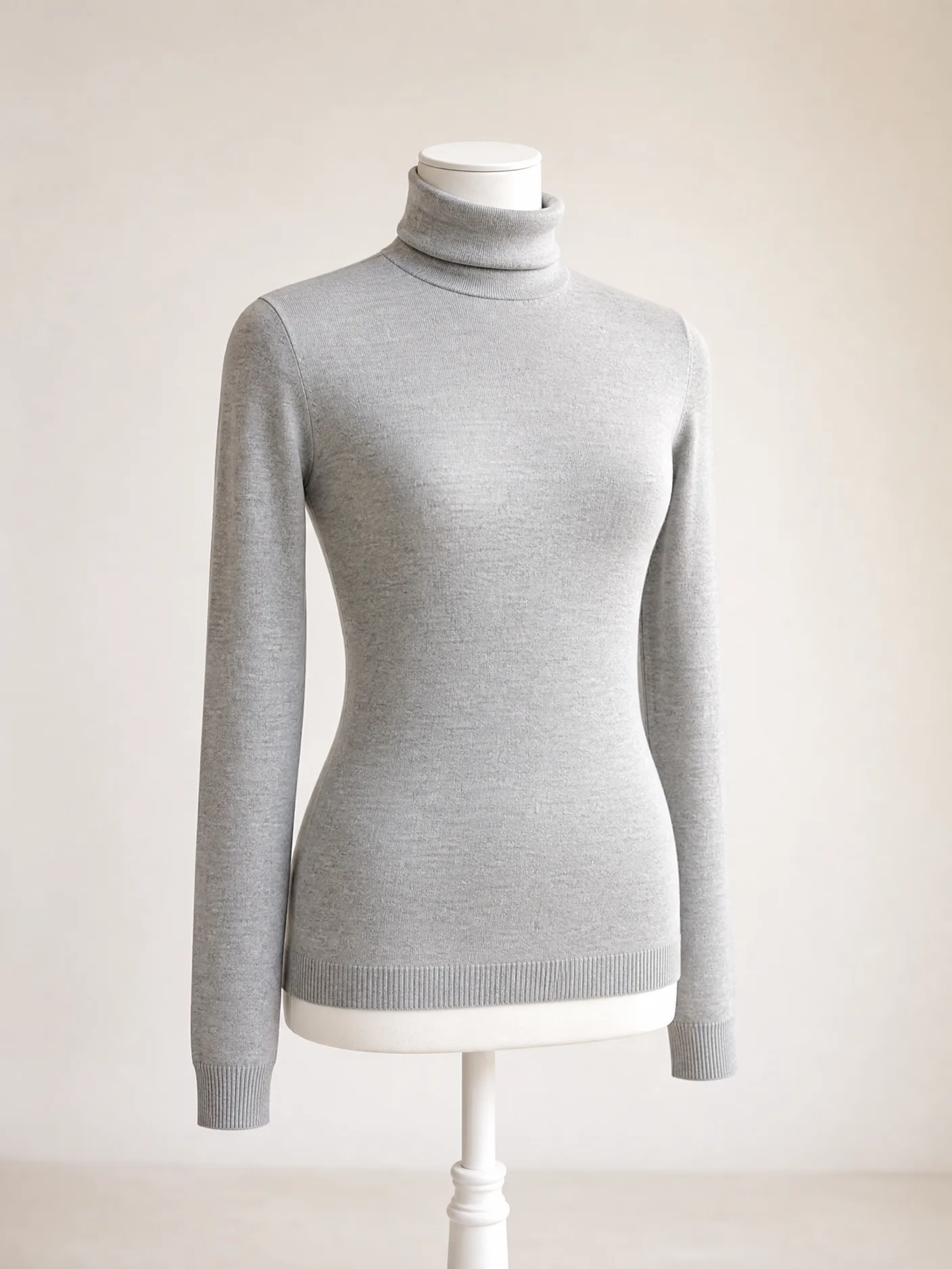
It does the quiet work of the wardrobe: under the blazer on the cold mornings, on its own at the desk once the heating finally wins, pushed up at the sleeve when the afternoon turns warm. At $695 it is the least expensive thing here and the one you will wear most, which is the right way round.
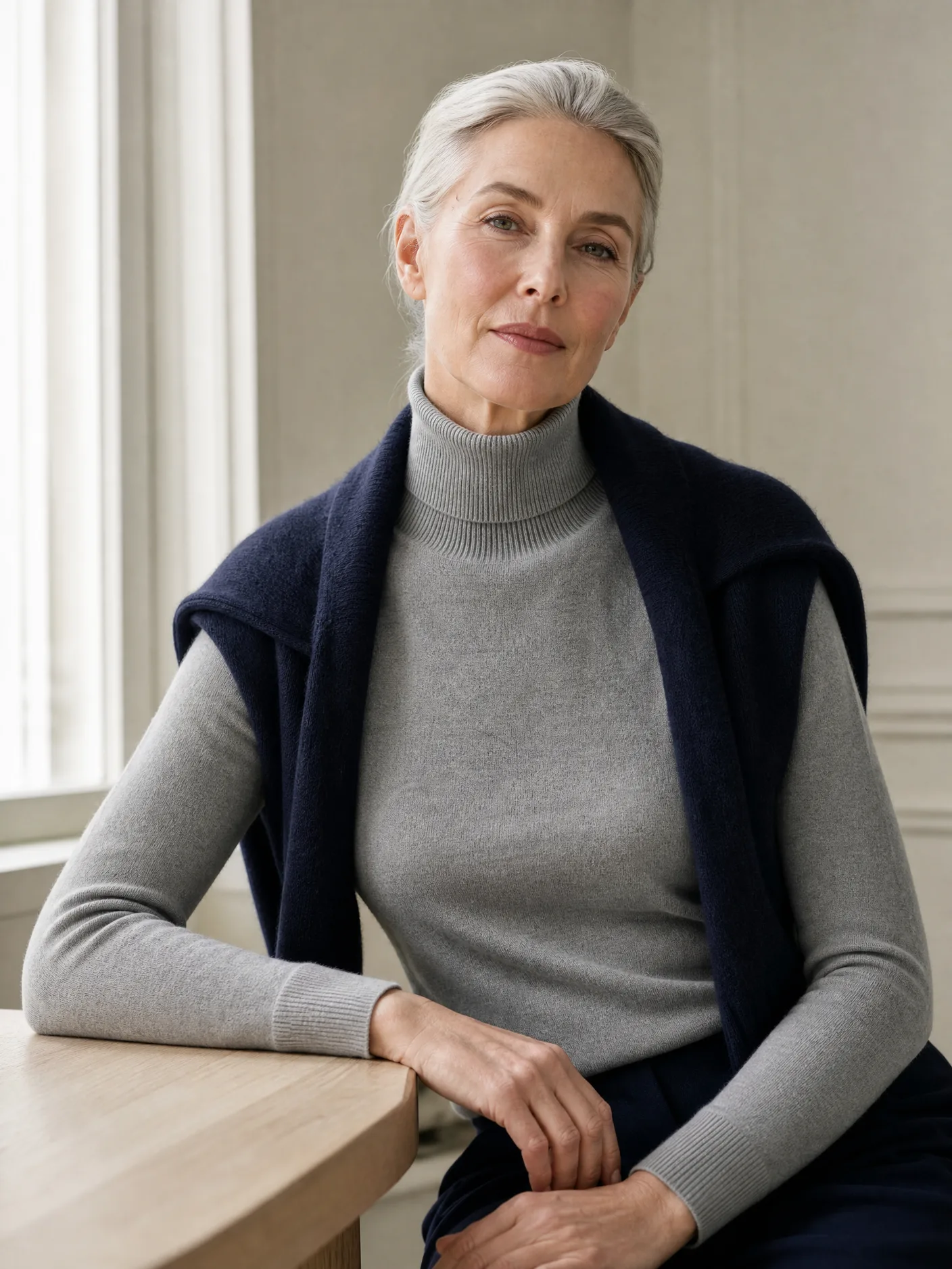
The temptation is The Row’s cashmere rollneck at $1,950. For a piece that spends most of its life under a blazer, resist it: the wool holds its neck through a commute better than cashmere does, and no one at the desk can see the fiber you paid nearly triple for.
The blazer, which does the work of a suit
If one piece earns the splurge, it is the blazer, because it does the work of a whole suit five days a week. Name the tag first, because it is the honest part: Victoria Beckham’s double-breasted blazer in camel is 70 percent wool and 30 percent synthetic — and on a site that tells you to buy the fiber before the label, that number is the argument, not a footnote.
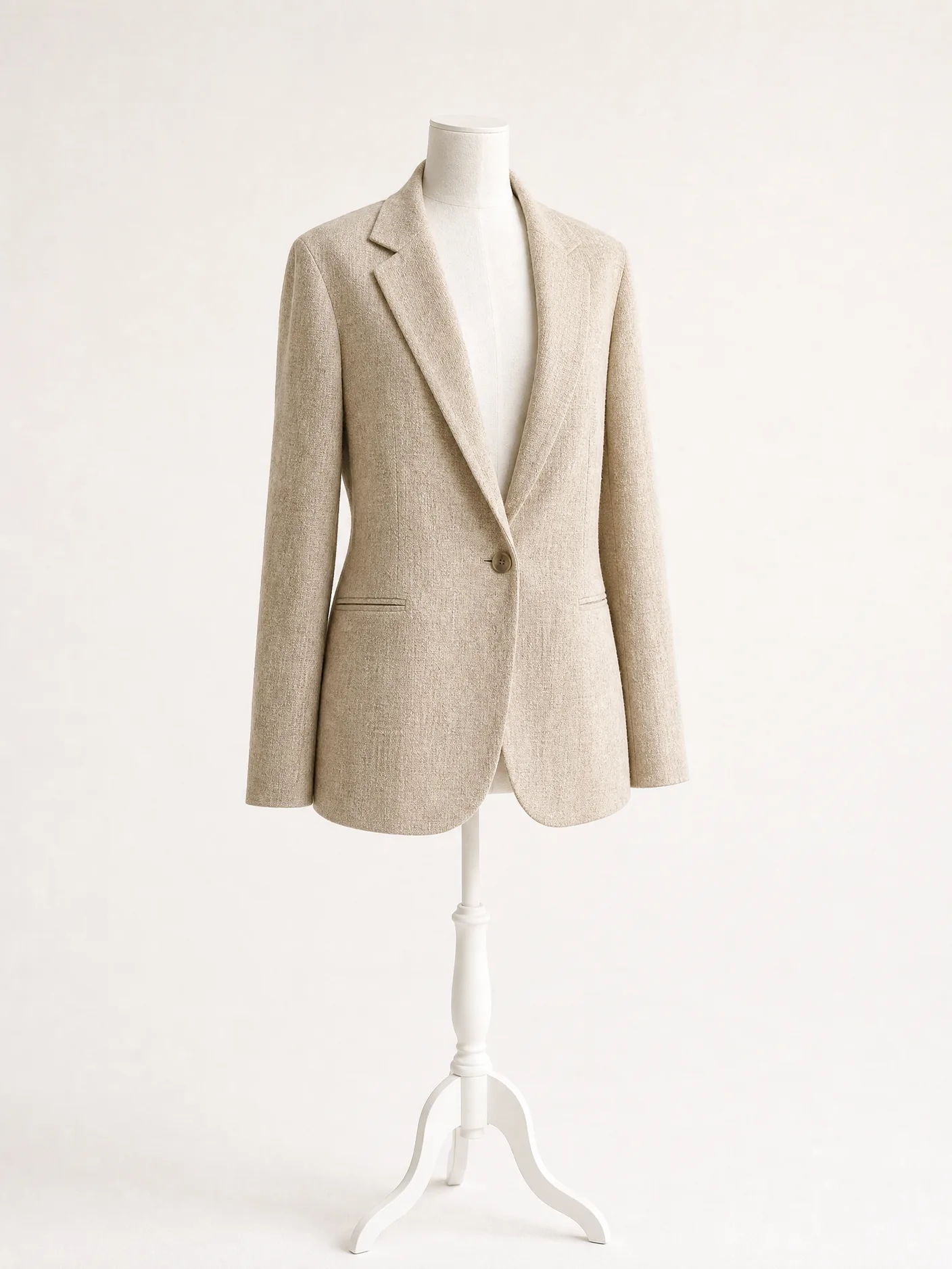
Here is what the 30 percent buys, because it is not nothing. A pure-wool jacket at this cut tends to bag at the elbow and drop its shoulder by the second winter; the synthetic share is what holds the line through daily wear and a commute’s worth of sitting. It is also what fixes the color — the “Camel Melange” reads as oatmeal in daylight and keeps that depth instead of going flat — and what lets a double-breasted front lie clean rather than gape. You are not paying $2,250 for the fiber. You are paying for a jacket that still looks like this on its two-hundredth wearing, which pure wool at this price does not reliably promise.
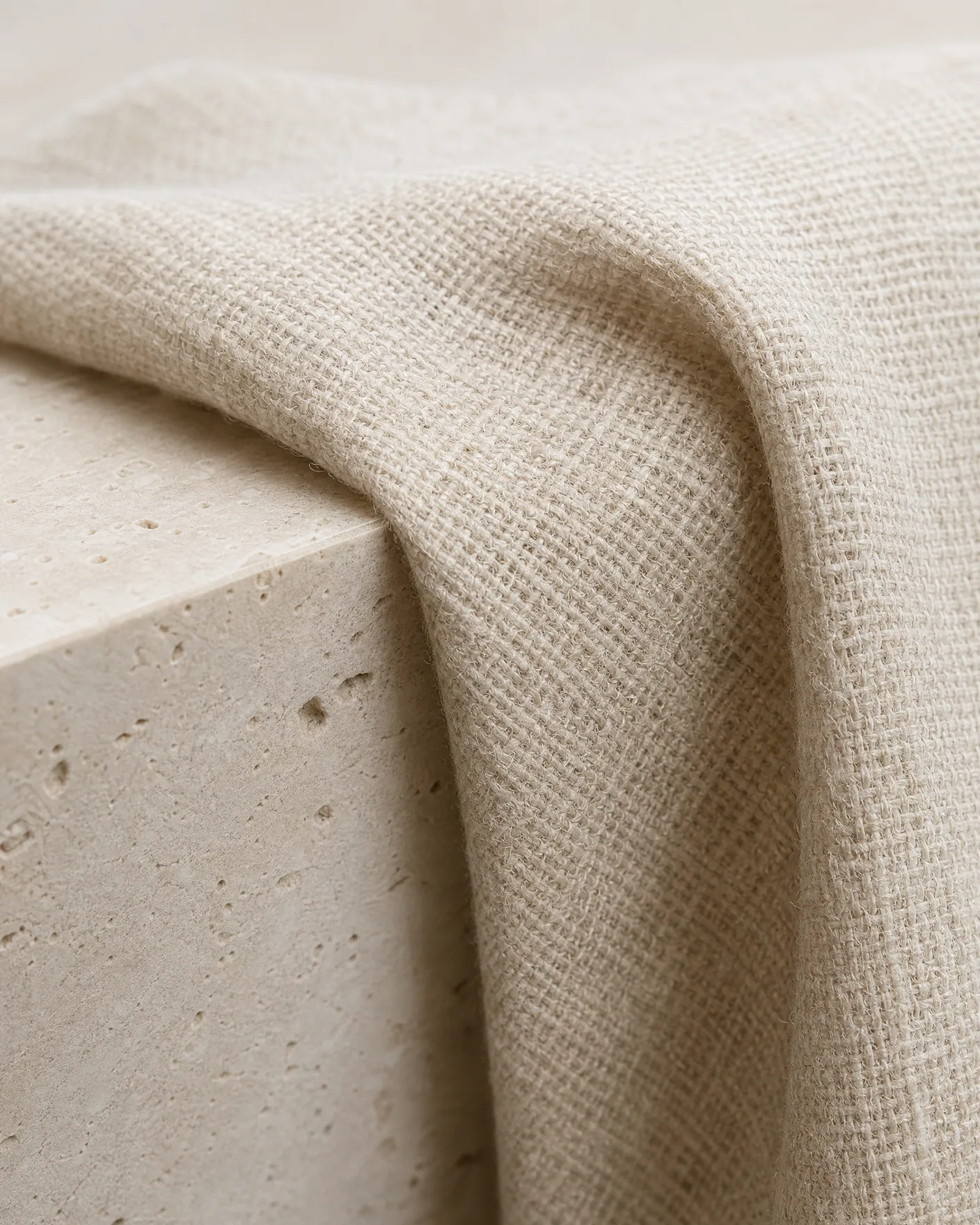
So the honest line, said plainly: if you are a fiber purist, this is not your piece — yours is the rollneck above, 100 percent virgin wool at less than a third of the price, and there is no shame in letting that be where the wool budget goes. The blazer earns its slot on a different axis. Worn twice a week for three years it costs about seven dollars a wearing, over a dress, over the rollneck, over trousers, five ways a week — where a matched suit costs the same and works one way. The tension between the pure-wool knit and the blended blazer is not an accident of this list; it is the list being honest about where a blend earns its keep and where it does not.
The trousers that go desk to dinner
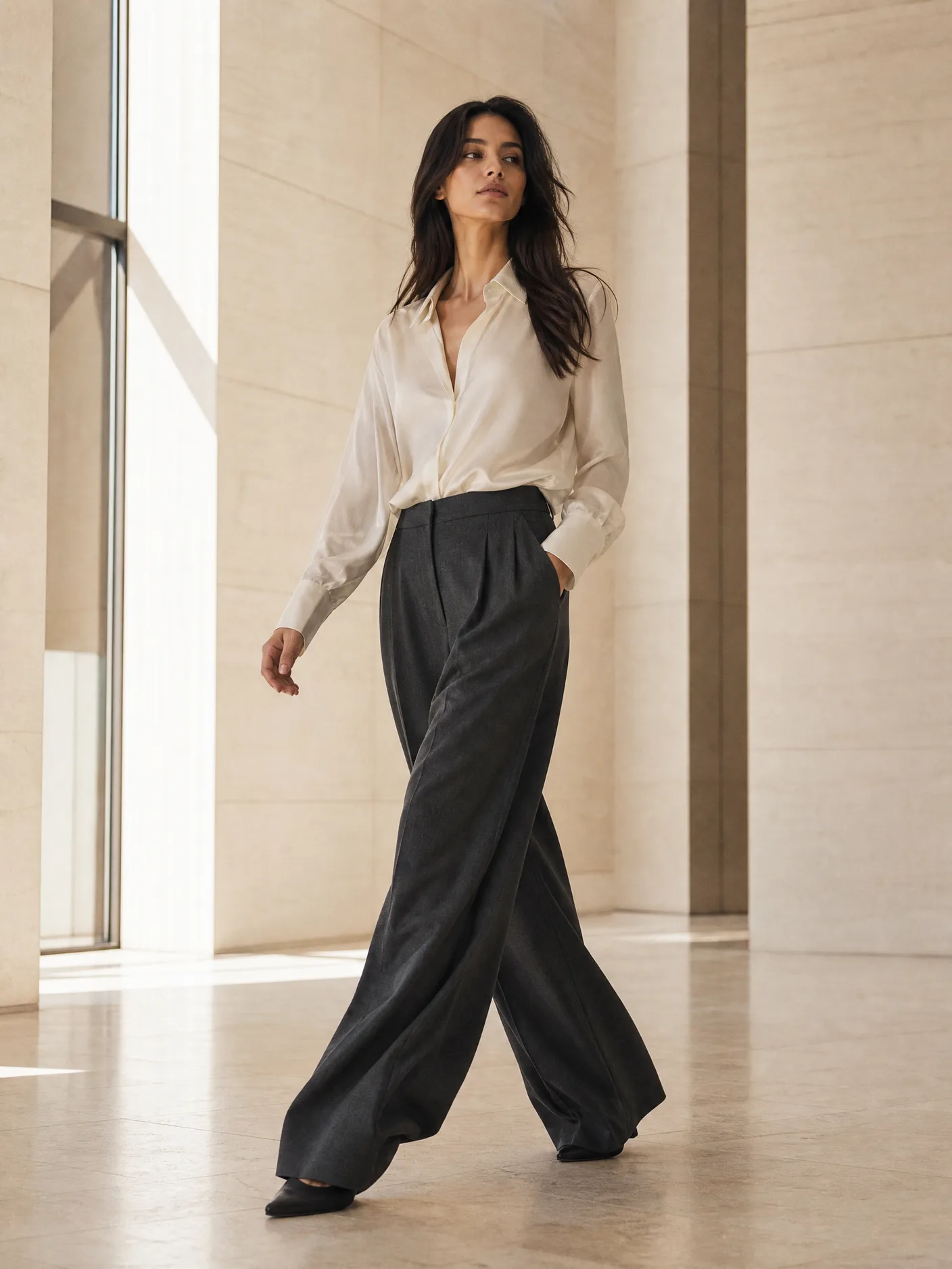
The foundation is a wide-leg trouser in the blazer’s neighbor color, not its match. Loewe’s paneled wool wide-leg in charcoal answers the fiber question the blazer sets aside: 100 percent wool, made in Italy, cut full through the leg and clean at the waist. Charcoal against the camel blazer is a more senior pairing than either piece matched to itself.
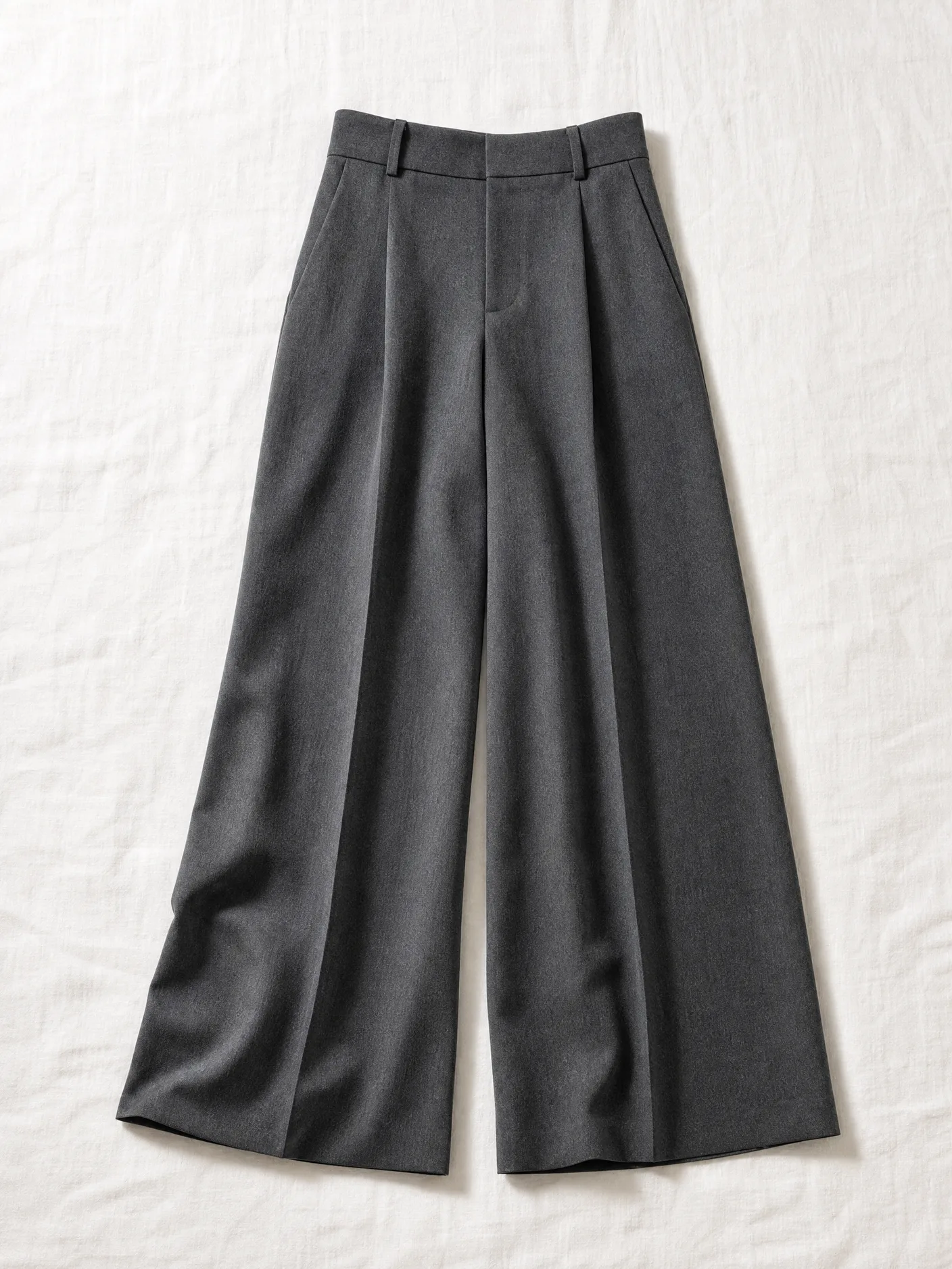
They are the piece that walks from the 7:04 desk to a client dinner without a change of clothes, and that reads as intentional whether the blazer is on or over the back of the chair. At $1,800 they are the trouser you press on Sunday and stop thinking about.
The coat is the ten-year decision
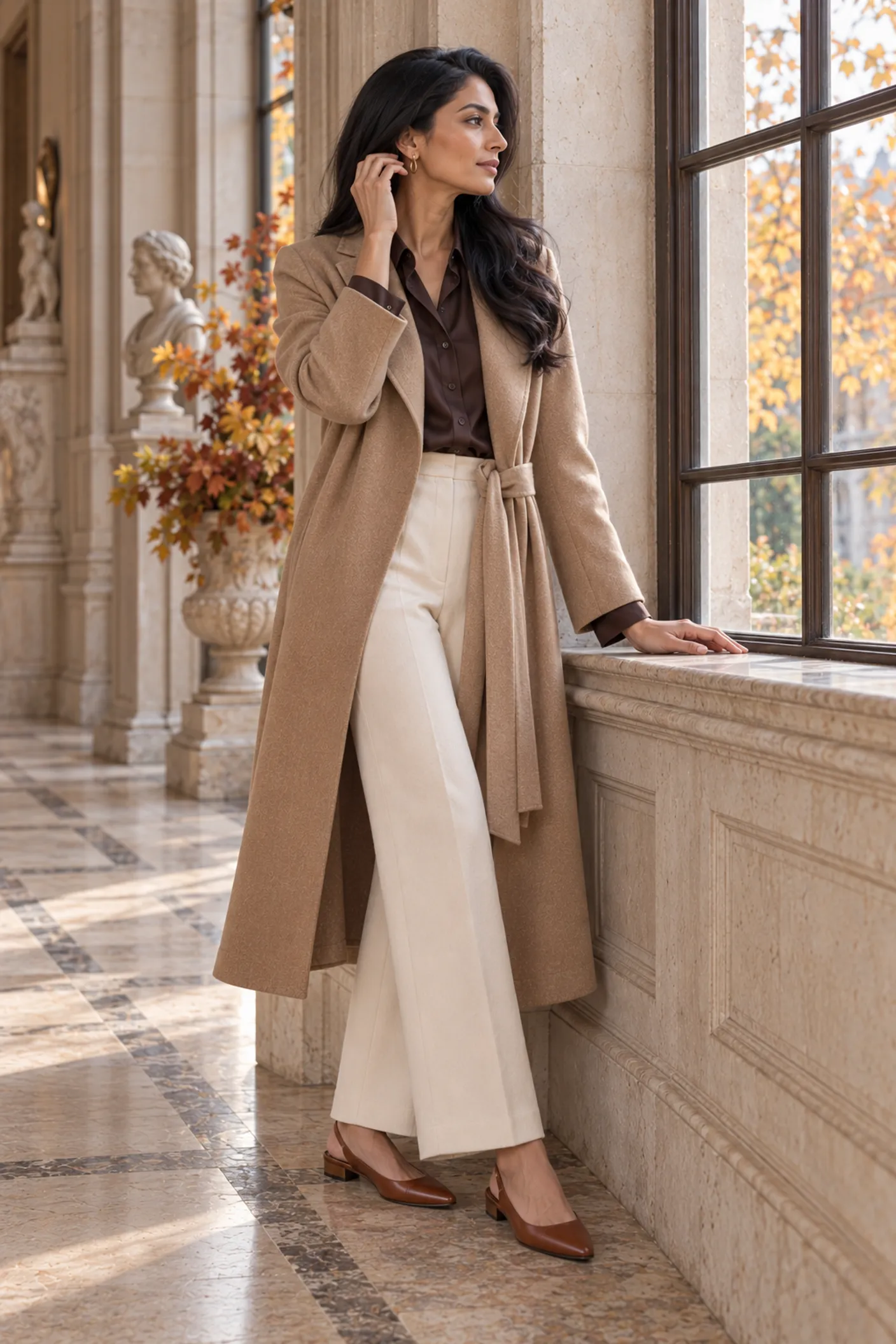
The coat is the piece whose math runs in years, not wearings. Isabel Marant’s Ceaton wrap coat in “Sand” is 90 percent wool and 10 percent cashmere, belted rather than buttoned, with no hardware to catch the eye — a camel coat, which is the one outer layer that reads with every color underneath it.
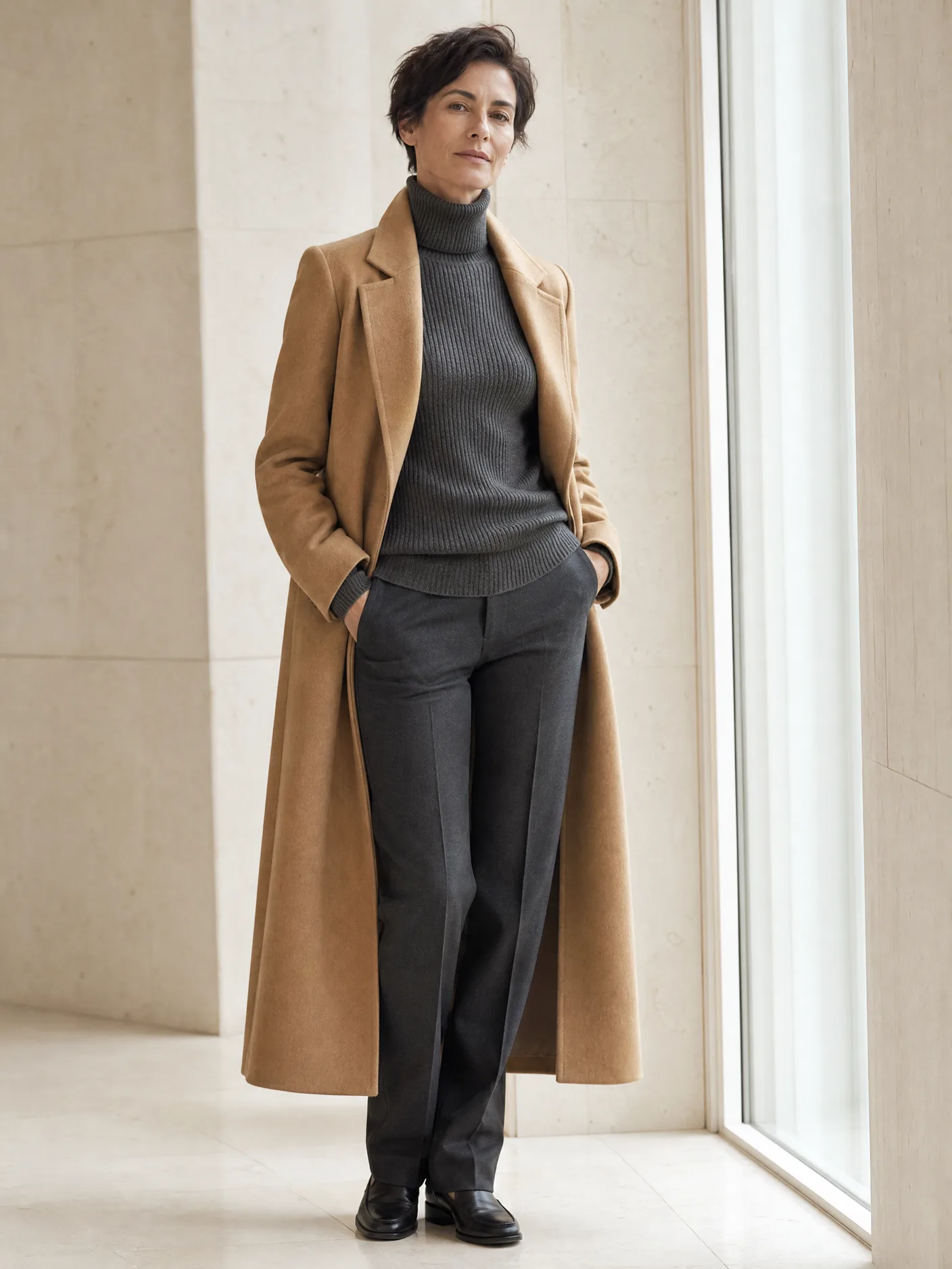
This is the one to buy well and keep. On the Acela platform in January it is doing the work every day, and a good camel coat is a ten-year coat. At $1,690 across ten winters it costs less than replacing a mediocre wool coat every other season, which is the real alternative. The archetype is Max Mara’s camel wrap at $5,490 — the coat every camel coat is measured against, and three times the price for a difference no one registers under a scarf. Hold off; the Marant reads the same on the platform.
The shoe with nothing to find
The shoe is chosen by the ground, not the heel. JW Anderson’s suede penny loafer has nothing on it for a camera to catch — calf suede, leather-lined, on a rubber sole that treats subway stairs, old sidewalks and a client’s gravel drive as the same surface. It is the quiet test passed: no hardware at all.
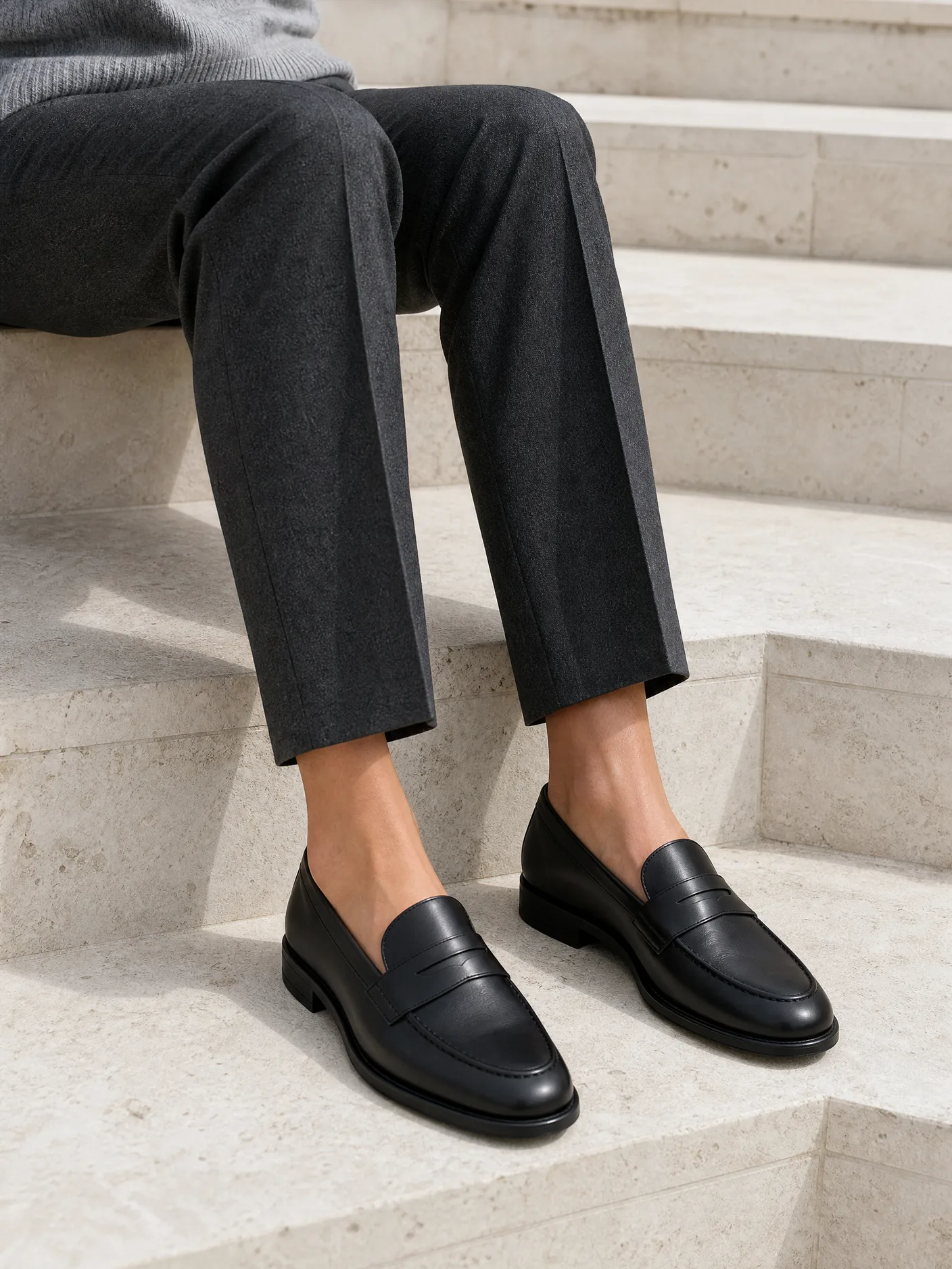
The color is a dark taupe rather than the black a desk might default to; on a shoe this quiet, that softening is yours to make, and it reads with the camel and charcoal better than black would. At $910 it is the piece that disappears into the outfit, which is the highest thing a work shoe can do.
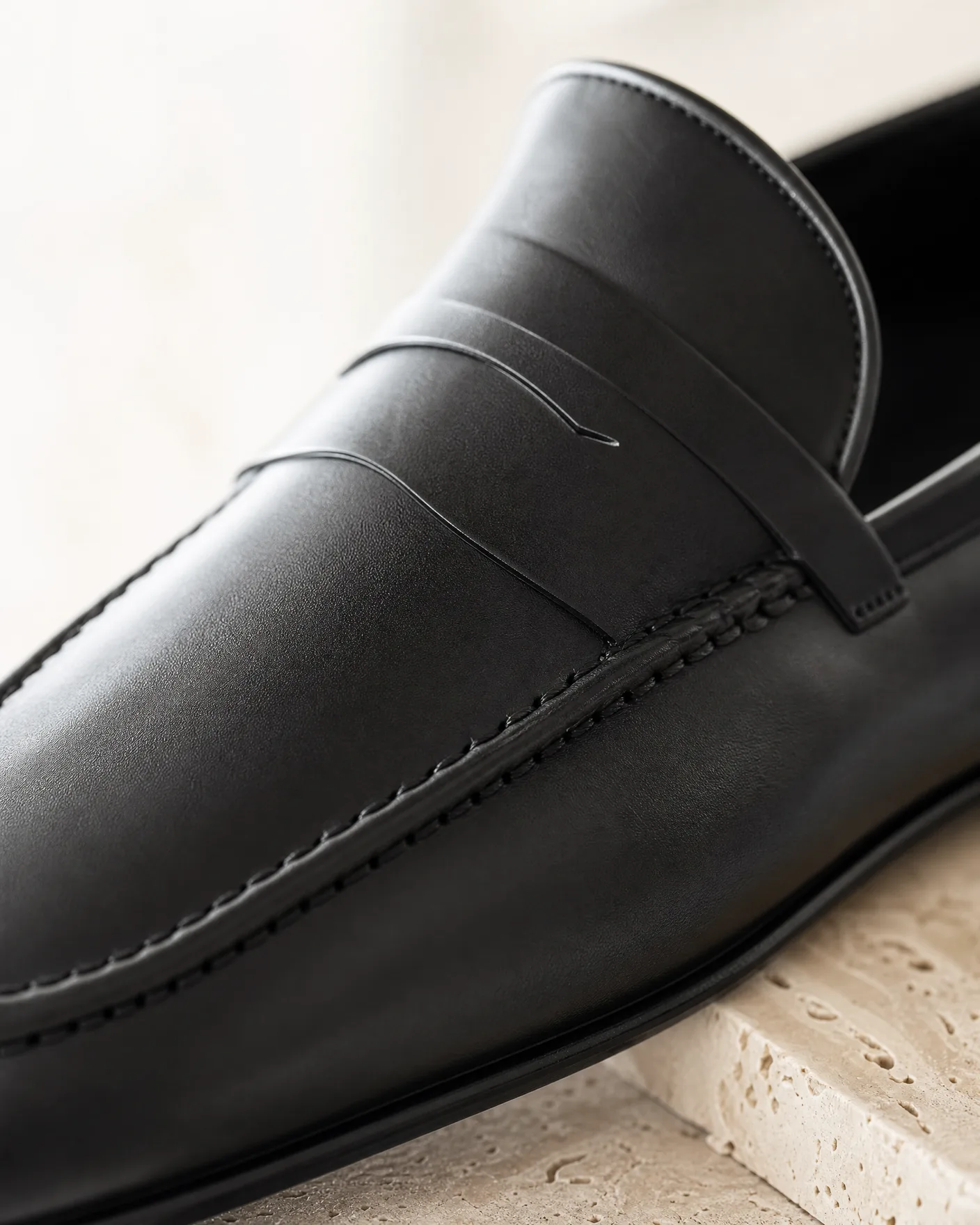
It is the desk cousin of the weekend suede loafer from the off-season Hamptons wardrobe — the same rubber-soled answer to mixed ground, cut a shade sharper for the floor. That weekend pair has since sold down to its last sizes; quiet shoes tend to.
Suede keeps its one condition: check the forecast before committing it to a wet morning. That is the whole maintenance.
How the five go together
Five anchors make more than five outfits, which is the point of choosing them as a set. The rollneck goes under the blazer; the blazer goes under the coat; the charcoal trousers carry all three and the taupe loafer closes them. Camel, oatmeal, grey, charcoal, taupe — one palette, deliberately narrow, so every piece rhymes with every other and nothing fights for attention.
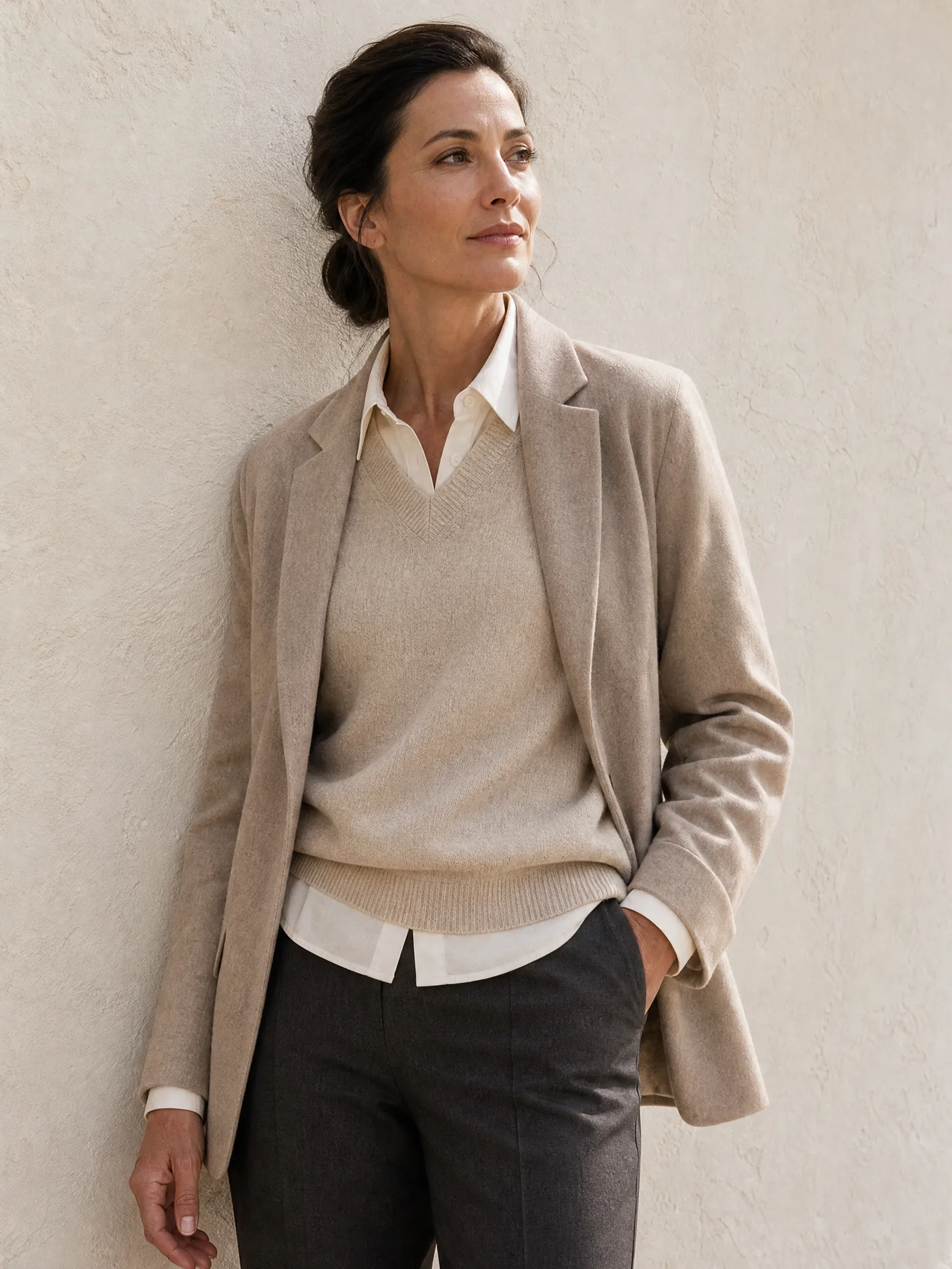
Worn against each other the five cover the real week: the rollneck and trousers on the quiet days, the blazer added for the meeting, the coat over all of it from the platform to the lobby. A larger closet of adequate pieces reads as effort. This reads as a decision already made.
The Edit at a Glance
| The piece | Brand | Price | Link |
|---|---|---|---|
| Ribbed rollneck, medium grey | Max Mara | $695 | the grey rollneck |
| Double-breasted blazer, camel | Victoria Beckham | $2,250 | the camel blazer |
| Paneled wide-leg trousers, charcoal | Loewe | $1,800 | the charcoal trousers |
| Ceaton wrap coat, sand | Isabel Marant | $1,690 | the camel coat |
| Suede penny loafer, dark taupe | JW Anderson | $910 | the suede loafer |
Prices re-verified September 19, 2026.
Buy once, then defend it
An office wardrobe is not built in a season; it is built once and defended against the urge to add to it. These five were chosen so there is nothing to add — a rollneck you reach for first, a blazer that does a suit’s job, trousers that go to dinner, a coat measured in winters, and a shoe with nothing to announce. The quiet this buys is the same thing a logo tries to do, and does badly. Buy the cloth, wear it often, and let it be the least interesting thing anyone remembers about the meeting.